


- Published on: 2026-11-27 18:01:56
Limit Orders vs Market Orders for Scalp Traders: How Price Works

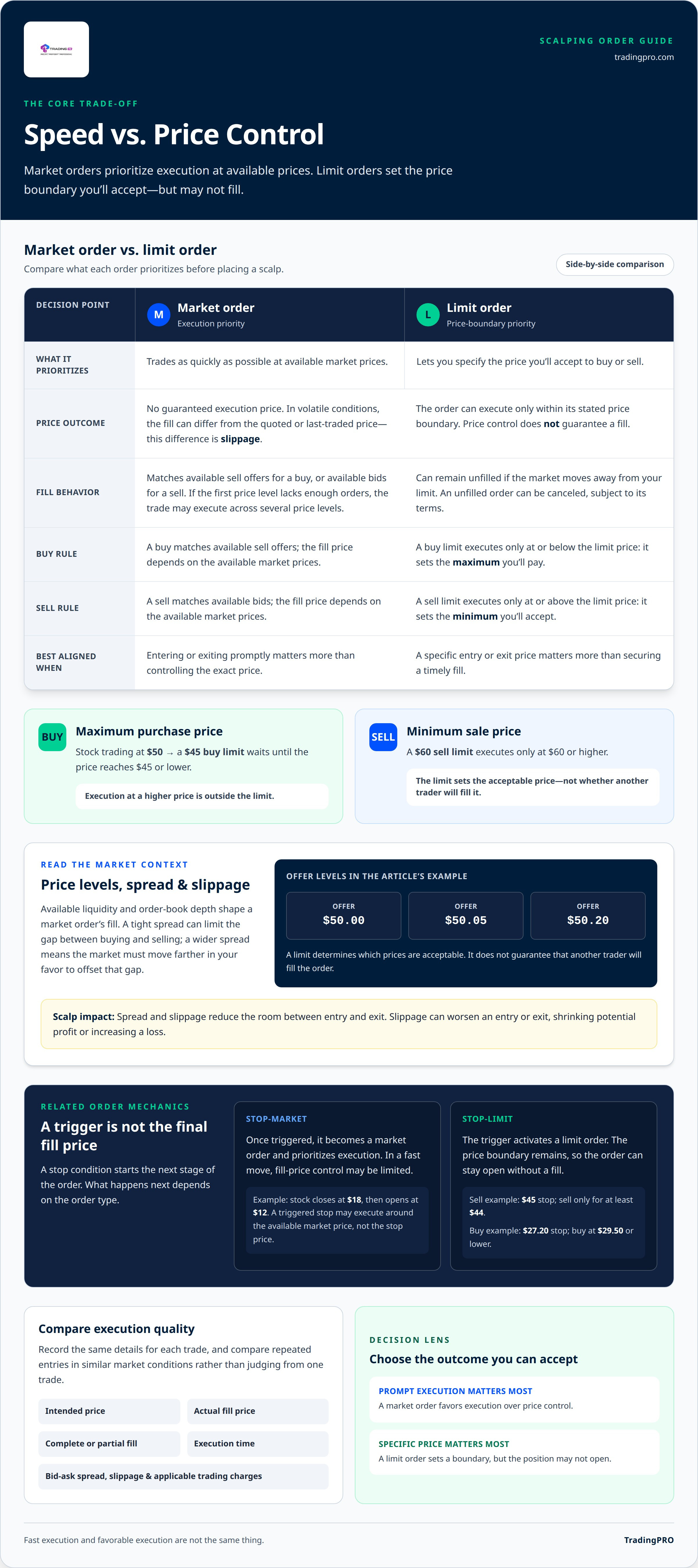
For scalpers, a better entry price can be the worse execution if the trade never fills. Understanding limit orders vs market orders for scalp traders starts with the trade-off: a market order prioritizes speed at the current market price, while a limit order sets the price boundary you’ll accept. According to FINRA, a buy limit can execute only at or below its limit price, and a sell limit only at or above it.
Fast entries and exits matter in scalping, but so does the price you receive. In volatile conditions, a market order may execute away from the quoted or last-traded price, a difference known as slippage. A limit order gives you more price control, but it may remain unfilled as the market moves on. This guide explains how each order type works, what affects execution, and when speed or price control may better suit a scalping setup. Use these considerations to choose an order type that fits your entry, exit, and risk priorities.
Key Takeaways
- Use a market order when execution speed matters most, while allowing for a fill price that can differ from the quote in volatile conditions.
- Set a limit order to define the highest price you’ll pay to buy or the lowest price you’ll accept to sell, but be prepared for it not to fill.
- Read the order book and spread to understand how available liquidity can affect the price and completeness of an order.
- Match the order type to the setup: prioritize execution for time-sensitive entries and exits, or price control when waiting for a specific level fits your plan.
- Explore the Scalp Account as a trading account option designed for a scalping style.
What is a limit order?
A limit order lets a trader specify the price they’ll accept to buy or sell. FINRA says a buy limit can execute only at or below its limit price, while a sell limit can execute only at or above it. For example, a $45 buy limit on a stock trading at $50 waits until the price reaches $45 or lower. A $60 sell limit executes only at $60 or higher.
A market order prioritizes execution as quickly as possible at available market prices. You specify the asset and quantity, but not a guaranteed execution price. On an exchange, a buy typically matches available sell offers, while a sell matches available bids. If the first price level lacks enough orders to fill the order, it may execute across several price levels.
That speed creates price uncertainty. A market order may execute at a different price from the quoted or last-traded price during volatile conditions; traders call the difference slippage. A stop-loss order shows why a trigger price isn’t always the final execution price. If a stock closes at $18 and opens at $12, a stop triggered by the gap may execute around the available market price, not its stop price.
A stop-loss trigger begins the next stage of the order. With a stop-market order, once the trigger condition is met, the order becomes a market order and prioritizes execution. In a fast move, there may be little control over the fill price. A limit order, by contrast, controls the acceptable price but can remain unfilled if the market moves away. You can cancel an unfilled order, subject to its terms.
Compare execution quality by recording the intended price, actual fill price, whether the order filled completely, and execution time. Include the bid-ask spread, slippage, and applicable trading charges when assessing total costs. For example, compare repeated entries in similar market conditions instead of judging an order type by a single trade. This helps distinguish fast execution from favorable execution.
Bid-ask spreads and slippage reduce the room between a scalp’s entry and exit prices. A wider spread means the market must move farther in your favor to offset the gap between buying and selling prices. Slippage can further worsen an entry or exit, shrinking potential profit or increasing a loss. For limit orders vs market orders for scalp traders, the trade-off is clear: speed can cost price precision, while price control can cost a timely fill.
Choose the order type to match the immediate objective. If entering or exiting promptly is the priority, a market order favors execution over price control. If a specific entry price is essential, a limit order sets a boundary, but the position may not open. Account for both outcomes in your scalp plan before placing the order.
Maximum purchase and minimum sale prices
A limit price sets the maximum a buyer will pay or the minimum a seller will accept. It controls the price, but doesn’t guarantee a fill.
Price Control Versus Fill Guarantees
Price control means an order can execute only within its stated limit; a fill guarantee means execution is certain. A limit order provides the first, not the second. If a stock trades at $17.00, a $14.50 buy limit waits until the price reaches $14.50 or lower. If it never does, the order can remain unfilled while the opportunity passes.
Setting Limits Around the Bid and Ask
Scalpers set buy limits at or below the bid, and sell limits at or above the ask, to define their acceptable entry or exit price. A limit between the bid and ask can seek a better price, but may not execute if the market moves away. In an order-book example, offers of $50.00, $50.05, and $50.20 show how available prices can differ. The chosen limit determines which prices are acceptable, not whether another trader will fill the order.
That distinction matters when price moves quickly. A $20 limit sell order executes only if the share price reaches $20 or higher. If the price rises above $20, the order may still execute at its specified price, rather than automatically capturing the full favorable move. For a short-term investment, decide whether the minimum sale price matters more than a prompt exit.
A stop-limit order combines a trigger with a price boundary. In one sell example, the order activates at a $45 stop price and sells only if the seller can receive at least $44 per share. The trigger starts the limit order; it doesn’t force a fill. If available bids fall below $44, the order can stay open while the market continues moving.
Buy stop-limit orders work with the same two-stage logic, but their limits cap the purchase price. One example activates at a $27.20 stop price and sets a $29.50 limit price. Once triggered, the order can buy at the limit or lower, but not above it. A fast price move beyond that cap can leave the intended position unfilled.
Before an order is placed, decide which outcome matters more: protecting the price or securing execution. A limit can help control the financial terms of a trade, while an unfilled order can leave the scalper without the planned shares. For a live trading setup, put your order-planning approach into practice with the same price boundaries in mind.
Market orders and liquid stocks
A market order trades against available orders, so liquidity and price depth shape its fill. For scalpers, the best offer is only part of the execution picture.
Liquidity in Stocks
Liquidity describes how readily a stock can be traded using available buy and sell orders. A market order lets a scalper prioritize execution, but the order may reach several price levels if the best offer lacks enough shares. In an order-book example, the best offer is $50.00 for 200 shares. That visible depth matters more to the immediate fill than trading volume alone.
For a highly liquid stock, a tight spread can limit the gap between buying and selling prices. But a narrow spread doesn’t show how many shares are available at each price. If you assume the best quote will cover the full order, you may receive a different average price when the order reaches deeper offers. Check both the spread and available quantities.
Liquidity During Fast Markets
In a fast market, prices can move before displayed orders are executed or replaced. A market buy may reach an offer after the shares have disappeared, then match against a higher price level. The order still prioritizes execution, but changing quotes can shift its average fill. For a scalp, that movement can eat into the planned price margin.
Consider an order book showing offers at $50.00, $50.05, and $50.20. If the $50.00 offer disappears before the market order arrives, the first available match may be $50.05. If more offers also move, the execution can reach $50.20. A calm snapshot can’t guarantee the same available liquidity a moment later.
Partial Fills and Available Liquidity
A partial fill occurs when available shares cover only part of an order. For example, a buy limit for 100 shares may fill just 50 if only 50 shares are offered at its limit price. The remaining quantity waits unless it fills later or the trader cancels it. This matters when a scalp depends on entering the full intended position.
Market orders can also consume several levels to complete a larger order. In the order-book example, offers include 200 shares at $50.00, 300 at $50.05, and 500 at $50.20. A market buy for 1,000 shares receives an average price of about $50.12. The full quantity executes, but not all shares fill at the best offer.
Compare the requested quantity with visible depth before submitting an order. If a stock shows only 200 shares at its best offer, a 1,000-share market buy may reach higher offers. A limit order lets the trader cap the acceptable purchase price, but any unfilled remainder may remain open. The trade-off is between reaching available liquidity quickly and restricting the prices accepted.
For scalpers, execution quality depends on what the order book can supply when the order arrives. Check the best bid and ask, quantities at nearby levels, and how quickly those levels change. A market order favors speed; a limit order preserves a price boundary. Neither can create liquidity that isn’t in the book.
Choosing an order type for a trading strategy
Choose the order type according to the trade’s priority: timely execution, a defined entry price, or a controlled exit. The setup and market conditions can change which priority matters most for a scalper.
A market order can suit a breakout entry when the signal depends on acting as the price moves through a level. It prioritizes execution, which may help you avoid missing a fast move. The trade-off is less certainty about the fill price, especially if the market is volatile or available orders shift before your trade reaches them.
A limit order can suit a range-bound setup in which you plan to buy near support or sell near resistance. A buy limit at the bid can seek a better entry, while a sell limit at the offer can target a specific exit. The order may remain unfilled if the price doesn’t return to that level, so account for the possibility of a missed trade.
Position size also matters. A market order for fewer than 100 shares may be practical when prompt execution is the priority. For trades above 100 shares, consider how the available depth and spread affect the fill; a limit can set a price boundary, but may leave part or all of the order open. These are decision points, not automatic rules. The setup and current order book still matter.
When selling, match the order type to your reason for exiting. A market order can prioritize leaving a losing position promptly, while a limit sell can set the minimum acceptable price for a planned profit-taking exit. If the price moves away from the limit, the position remains open. Decide whether price control is worth that exposure.
Compare actual fills with the strategy’s planned entry and exit. One trader’s reported experience illustrates why: market-order entries needed a favorable move of two ticks before the trader could try to cut the position, while limit-order entries allowed an attempted exit after a one-tick move. Those results apply to that example, not as a universal trading rule. Record intended and executed prices across comparable setups.
Use a simple decision filter before placing an order:
- Fast breakout: consider a market order when missing the move matters more than entry-price precision.
- Range entry: consider a limit order when reaching a particular level is central to the setup.
- Exit: decide whether prompt execution or a minimum acceptable sale price best fits the position’s risk.
For limit orders vs market orders for scalp traders, consistency comes from applying the same decision criteria to each setup. Track the order type, market conditions, entry, exit, and resulting position outcome. Your records can show whether the strategy benefits more from execution speed or waiting for a specified price.
How buy and sell limit orders work
A buy limit sets the highest price you’ll pay; a sell limit sets the lowest price you’ll accept. The order stays active until it fills, expires under its terms, or is canceled. For scalpers, this boundary can define a planned entry or exit, but it doesn’t ensure the market will trade at that level.
Consider EUR/USD trading at 1.1500. A trader expecting a pullback could place a buy limit at 1.1450, aiming to enter only if price falls to that level or lower. If the pair turns upward before reaching 1.1450, the order remains unfilled. The trader gets price discipline, but may miss the move and need to reassess the setup.
A sell limit can target a planned exit above the current market. In the USD/JPY example, the pair trades at 110.00 and a trader places a sell limit at 110.50, anticipating a later decline. The order can execute at 110.50 or higher, but only if buyers are available there. If price reverses before reaching 110.50, the position remains open.
That’s what distinguishes a limit order from a market order. A market order prioritizes execution at available prices; a limit order prioritizes its specified price boundary. In volatile markets, the difference matters: prices can move through a planned level quickly, while a limit may not fill if available orders disappear or the market moves away. Account for both a missed entry and an open position awaiting an exit.
Check the order status after placing it. A full fill completes the intended quantity; a partial fill leaves the remainder active if the order terms allow it. For example, if only part of a buy limit matches with a seller, you hold a smaller position than planned. Canceling the remainder can prevent a later fill from unexpectedly changing your exposure.
Before placing either order, define the price that invalidates the trade idea and the price that still supports it. For a buy limit, set the maximum entry price; for a sell limit, set the minimum exit price. Then consider whether waiting for that level suits the setup or whether execution matters more. This keeps the order type aligned with the scalp’s purpose.
Put this framework into practice by opening a trading account and applying clear price boundaries to each planned entry and exit.
TradingPRO: Scalp Account
TradingPRO’s Scalp Account is designed for traders focused on scalping. The order-type decision remains part of your strategy: market orders prioritize execution, while limit orders set a price boundary. Use the distinctions in this guide to decide how each choice fits your intended entries, exits, and approach to risk.
If scalping is central to your trading style, consider whether the Scalp Account fits your needs. TradingPRO also offers Rookie, Micro, and Pro Accounts for other trading approaches. Choose an account based on the style you plan to pursue, not on the assumption that it determines how orders execute.
To discuss your account options, contact TradingPRO.
Build a sharper trading routine
Make each order part of a repeatable decision process. Before your next session, write down what would make you choose one order type over another, then record whether execution matched your plan. Review your notes after trading. Patterns in your own entries and exits can help refine your approach without relying on a single outcome.
The choice of limit orders vs market orders for scalp traders ultimately comes down to how you want to manage each setup. Keep your criteria clear, apply them consistently, and adjust your process when your records reveal a mismatch between plan and execution.
TradingPRO offers account options for different trading approaches, including Rookie, Micro, and Pro Accounts. If you’re ready to take your next step, contact TradingPRO to discuss your trading. Move forward with a plan that fits your strategy.
Frequently Asked Questions
What is a market order?
A market order tells a broker to buy or sell at the best prices currently available. Its priority is execution, not a particular price. For example, if the lowest available sell offer changes before a buy order reaches the market, the order may fill at another available offer. It can also match across price levels when the quantity at the best quote is insufficient.
How can you protect yourself from bad fills?
Use a limit price when controlling the maximum purchase price or minimum sale price matters more than immediate execution. Before placing the order, assess the spread and the quantity available near the quote, then size the order to fit your trade plan. A limit can remain unfilled, so decide in advance how you’ll respond if the price moves away. No order type eliminates execution risk.
When does liquidity disappear?
Liquidity can thin when available bids or offers are canceled, consumed, or moved as prices shift. In a fast market, an order book that showed several price levels moments earlier may change before your order arrives. A sudden burst of trading can also use up displayed quantities. Watch prices and available orders together rather than treating a snapshot as a promise of future execution.
What is the difference between a market order and a limit order?
A market order prioritizes trading at available prices; a limit order sets the price boundary you’ll accept. For example, a trader seeking a quick exit may use a market sell, while one willing to wait for a minimum sale price may place a sell limit. The market order can execute at changing prices, while the limit can remain unfilled if the market doesn’t reach its price.
How do market and limit orders affect execution speed and price certainty for scalpers?
Market orders favor prompt execution, while limit orders offer more control over the acceptable price. In a quick move, a market entry may get you into the position sooner, but the fill can differ from the displayed quote. A limit entry avoids paying above its cap, yet the price may move away without a fill. Choose based on whether timing or entry precision matters more to the setup.
How does order book liquidity affect limit order fills for scalpers?
The order book shows available buy and sell interest at different prices, affecting whether a limit order can match. If only some of the desired quantity is available at the limit price, the order may be partially filled. If the market doesn’t trade at that price, it may not execute. A limit sets acceptable terms; available opposing orders determine whether a match occurs.
What are the risks of unfilled or partially filled limit orders in fast markets?
An unfilled limit can leave a scalper watching the intended move without a position. A partial fill creates a smaller position than planned, and the remainder may execute later if the order stays active. In a fast market, the price can also move away while you decide whether to keep, cancel, or replace the order. Each choice can change the trade’s timing and exposure.
When should scalpers use market orders instead of limit orders?
Scalpers may prefer a market order to enter a time-sensitive breakout or exit a losing position when prompt execution matters more than a precise price. That choice accepts price uncertainty, especially if the market is moving quickly or available depth is limited. A limit may suit a trade that depends on a specific entry or exit level. Let the setup’s priority guide your choice.


