


- Published on: 2026-11-05 18:30:56
4 Ways to Understand FOMO and Embrace the Joy of Missing Out
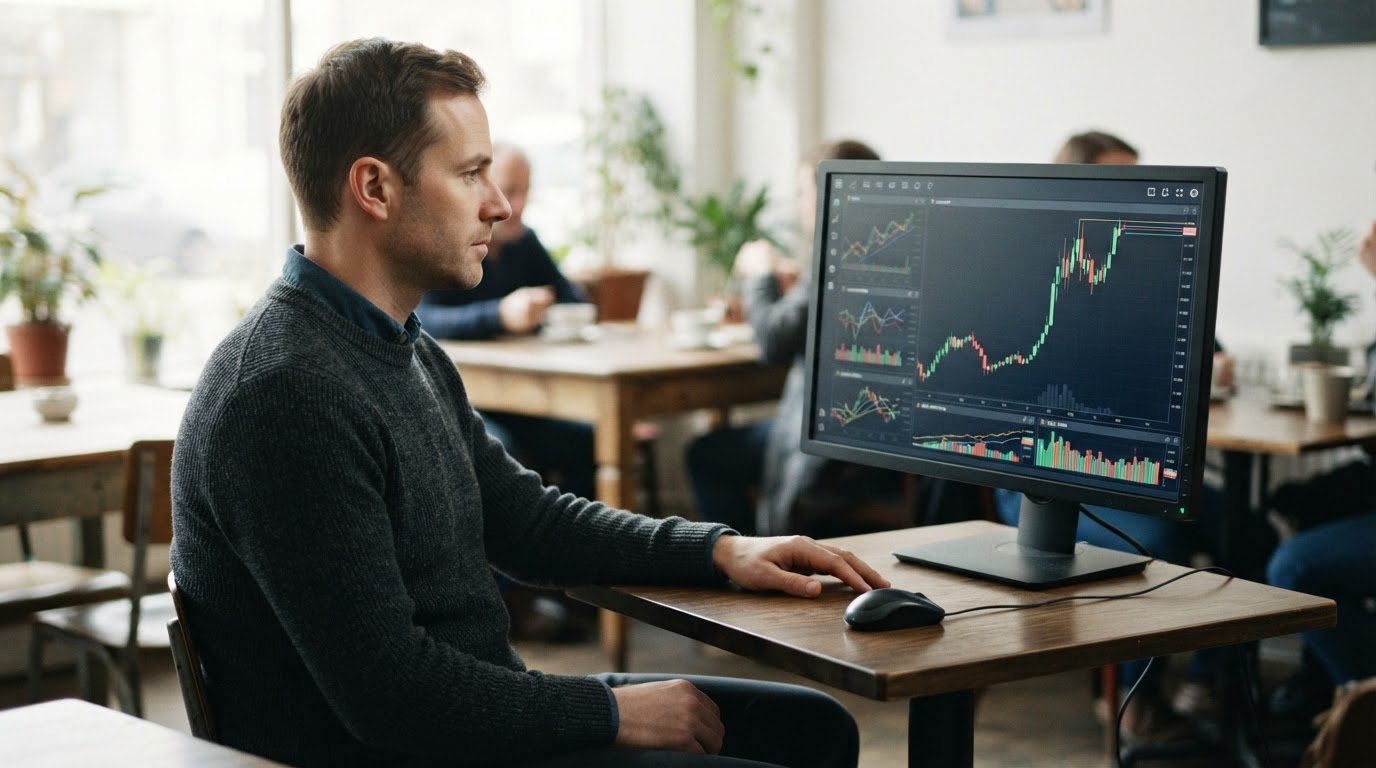
Missing out can feel like a threat, but FOMO is a fear-driven reaction, not proof that you’re making the wrong choice. Overcoming fear of missing out (FOMO) starts with noticing what’s driving the feeling and deciding what deserves your attention.
It’s easy to compare your everyday moments with the exciting highlights people share online, or to wonder whether another plan would have been better. Those thoughts can create stress and make it harder to enjoy the life you’re living now.
Explore four practical ways to understand FOMO and make choices with more confidence. Learn how to handle social media comparisons, accept the trade-offs of missed opportunities, recognize when feeling excluded is fueling stress, and find more joy in the present. The goal isn’t to do everything. It’s to choose what matters and feel good about what you leave out.
Key Takeaways
- Recognize how social media highlight reels can distort comparisons, then reduce exposure to content that triggers feelings of missing out.
- Use your personal goals to decide which opportunities deserve your time, and accept that every choice involves trade-offs.
- When exclusion sparks stress, pause and assess whether you’re facing a real danger or reacting to a difficult feeling.
- Build more joy into the present by giving your attention to the experiences you choose.
- Identify the situations that tend to trigger FOMO so you can respond with intention instead of reacting automatically.
1. Comparing real life with social media highlight reels
A friend posts a winning trade, a polished workspace, and a confident market prediction. You see the result, not the research, uncertainty, or losses behind the post. Social media condenses complex experiences into shareable moments, making other people’s progress look constant. Comparing your ordinary trading day with those highlights can make your own decisions seem slower or less successful than they are.
That comparison can lead to rushed choices: entering a trade because friends seem to be profiting, or abandoning a plan after seeing someone celebrate a different result. Pause when a post creates urgency. Ask what you actually know about the other person’s strategy, risk, and circumstances. A social media feed rarely shows those details. Measure progress against your own goals and past decisions, not someone else’s carefully framed update.
A practical way of overcoming fear of missing out (FOMO) is to reduce the comparison triggers you can control. Mute accounts that repeatedly make you feel behind, log out during planned trading sessions, and turn off nonessential notifications. You can also try a social media break for a day, a week, or a month. Use that time for a specific alternative, such as reviewing your trading journal or spending an uninterrupted evening with friends.
Research offers a reason to experiment with limits. A study found that reducing social media use to around 30 minutes a day could reduce feelings of depression and loneliness. In a University of Pennsylvania study, 143 college students participated; after three weeks, the limited-use group had significantly lower loneliness and depression than the control group. These findings concern study participants, not a guaranteed outcome for every person, but they support trying a measured change and noticing how it affects your mood.
Healthy ambition and FOMO differ in what drives your next action. Ambition moves you toward a goal you chose; FOMO pushes you to react because someone else seems to be getting ahead. Studying a market because it fits your trading plan reflects curiosity. Entering immediately because a friend posted about a sudden price move reflects pressure.
Build an abundance mindset by remembering that another person’s opportunity doesn’t erase yours. When a friend shares a success, congratulate them, then return to your own goals and criteria. Practical steps include checking updates at a planned time, keeping a record of your decisions, and staying present during meals or conversations instead of scrolling.
Seek support from a mental health professional when worry feels persistent, difficult to control, or disruptive to daily life. If social media comparisons repeatedly intensify anxiety, describe the pattern and its effects in a conversation with a professional. They can help you develop strategies suited to your circumstances.
2. Accepting missed opportunities and making choices
Every trading decision rules out alternatives. If you spend an evening reviewing a market, you might miss dinner with friends; if you take a break, a price move may happen without you. Neither choice proves you chose badly. Separate the outcome you can’t control from the decision you can: whether your action matched your goals, available information, and plan.
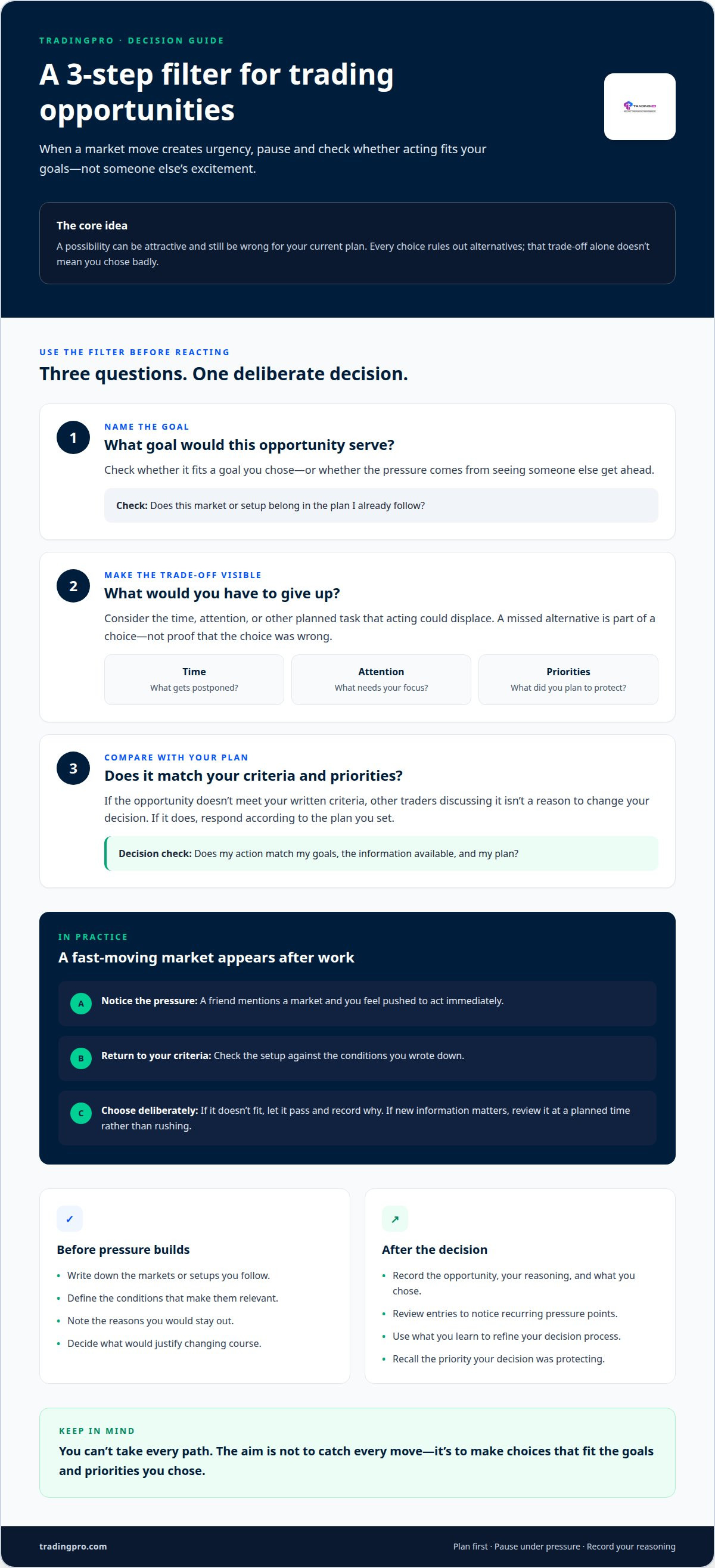
Manage FOMO without missing important opportunities by defining what counts as an opportunity before pressure builds. Write down the markets or setups you follow, the conditions that make them relevant, and the reasons you would stay out. If a price move doesn’t meet your criteria, seeing other traders discuss it isn’t a reason to change your decision.
Use a simple decision filter when an exciting possibility appears. First, name the goal it might serve. Next, identify what you would have to give up, such as time, attention, or another planned task. Then compare that trade-off with your priorities. A possibility can be attractive and still be wrong for your current plan.
Imagine a trader who planned to review a position after work. A friend mentions a fast-moving market, and the trader feels pressure to act immediately. Instead of treating the feeling as an instruction, they return to their written criteria. If the setup doesn’t fit, they let it pass and record why. That record helps distinguish a deliberate choice from an impulsive reaction.
Accepting a missed opportunity doesn’t mean ignoring every new development. It means choosing how to respond. Set a planned time to review relevant information, and decide in advance what would justify changing course. If an update arrives outside that routine, save it for later rather than making a rushed decision. This leaves your attention available for priorities beyond the trading screen.
It’s impossible to be everywhere or take every exciting path. Chasing each possibility can pull attention away from work, rest, and the goals you chose earlier. When regret appears, recall the reason for your decision: perhaps you were protecting time for a scheduled review or keeping a commitment to family. Naming that reason makes the trade-off concrete.
Turn your priorities into a written plan, then use it as a reference when urgency rises. A trading journal can record the opportunity, your reasoning, and what you chose. Review those entries to spot recurring pressure points and refine your decision process. If you’re ready to put your own trading goals into practice, you can create a trading account as one step toward a more deliberate approach.
3. FOMO and the biological stress response
A sudden market move can make a missed entry feel like an immediate threat. Feeling excluded can activate the amygdala and trigger a stress or fight-or-flight response. The amygdala detects threats to survival and may interpret a present-day feeling through the lens of past dangers. That reaction can make a market update seem urgent before you’ve assessed it.
Common signs of FOMO include envy, insecurity, anxiety, indecision, and doubts about your choices. In trading, you might keep checking prices, feel compelled to follow another trader’s position, or regret a decision simply because the market moved afterward. Notice the pattern: these feelings can signal pressure, but they don’t show that a trade fits your plan.
Stress can narrow your attention. Imagine seeing a sharp price move while you’re away from your screen. Your first impulse may be to enter immediately, fearing the opportunity will disappear. Pause before acting. Ask whether there’s an actual threat requiring an immediate response, or whether the discomfort comes from feeling left out. That distinction gives you room to decide.
Use a brief reset when urgency rises. Step away from the trading screen, feel your feet on the floor, and take a few slow, deep breaths as you notice each inhale and exhale. Then name the emotion: “I’m anxious because I think I missed a move.” Putting the feeling into words helps separate the sensation from the decision in front of you.
Next, return to your written trading plan. Check whether the situation meets your entry criteria, and identify what information would change your decision. If the setup doesn’t qualify, don’t treat an intense stress response as a signal to act. If it does qualify, follow your established process rather than making the decision larger or faster because you feel pressured.
A practical part of overcoming fear of missing out (FOMO) is learning to notice the urge without obeying it. Picture the urge to act as a wave: observe it rise, crest, and subside as you wait. This mindfulness technique takes practice. Repeating it in low-pressure moments can make it easier to use when a fast market move triggers anxiety.
Keep a short record after each episode: what happened, what you felt, and what you decided. Note, for example, whether a message from a trading group triggered urgency or a price jump prompted repeated checking. Reviewing those entries can reveal your personal triggers and help you prepare a specific pause or breathing step for the next time urgency rises. When FOMO triggers a stress response, pausing to assess whether there is a real danger can help someone calm down.
4. Joy of Missing Out (JOMO)
JOMO, the joy of missing out, means choosing to value the experience you have instead of chasing every alternative. For a trader, that might mean closing the platform at a planned time and enjoying dinner without checking market updates. This isn’t indifference to markets. It’s deliberate attention: decide when trading fits your goals, then give your remaining time to something else.
A 2025 study of 2,058 adults found that people with high JOMO and low FOMO had the lowest smartphone addiction and highest well-being. The finding points toward a useful shift in focus: make time for activities that matter, rather than measuring your day by opportunities you didn’t pursue. For example, finish a scheduled market review, then take a walk without reopening price alerts.
Mindfulness means being present without judging what you notice. It can help you recognize anxiety or a trading urge without reacting immediately. Try a short routine: put your phone aside, notice what’s happening around you, and give one chosen activity your full attention. During a meal, that could mean listening closely to a friend instead of checking whether a market has moved.
Gratitude gives your attention a practical anchor. Each morning, name something you value, such as time with family, progress on a personal goal, or a decision you made thoughtfully. Mindfulness brings your attention back to the present, while gratitude helps you notice what already feels meaningful. Together, they can make imagined alternatives feel less compelling.
Use your free time for what you can do, rather than worrying about every task or opportunity you can’t fit in. Write down one priority for the evening, such as preparing tomorrow’s trading plan or sharing dinner with family. If an alert tempts you to switch tasks, pause and ask whether it serves that priority. This makes JOMO a clear choice, not another performance target.
Build the practice with a repeatable boundary. For instance, choose a device-free meal or a closing ritual after your planned trading review. Notice how you feel before and after; don’t expect every quiet moment to feel rewarding immediately. Regular mindfulness practice can strengthen your habit of returning attention to the present, while small gratitude prompts keep your focus connected to what you value.
Mindfulness, being present without judgment, can help you feel calmer and appreciate what is in front of you. Let that awareness guide a simple choice: stay with the conversation, meal, or rest you chose, rather than mentally comparing it with another possibility. The aim isn’t to make every moment productive or perfect, but to notice its value as it happens.
Finding joy in current experiences instead of searching elsewhere can make ordinary free time feel more satisfying. Prioritize the time available to you rather than worrying about what you can’t do. When other possibilities come to mind, acknowledge them, then return to the activity you chose. This keeps your attention on what’s within reach and gives imagined alternatives less power over the moment.
5. What causes fear of missing out (FOMO)?
People rely on social connection, so exclusion can feel especially unsettling. In trading, that need for belonging may surface when a group chat celebrates a market move you didn’t catch. You might worry not only about a missed opportunity, but also about falling behind your peers. Recognizing both concerns helps you identify what’s driving the reaction.
FOMO can combine envy and insecurity. A trader sees someone describe a successful position and starts doubting a carefully chosen strategy. The post may prompt questions about whether they’re capable, informed, or making the right decisions. Those doubts can fuel anxiety, low mood, and indecision, especially when they treat another trader’s outcome as evidence about their own ability.
The term entered the Oxford English Dictionary in 2013. A study in Computers in Human Behavior found that three-quarters of respondents, mostly college-age students, experienced FOMO. That study also assessed it with ten statements, asking participants to rate how well each described their lives on a scale from one to five. The measure captures a pattern of feelings, not a trading diagnosis.
Market uncertainty can intensify these feelings. Imagine a trader seeing a rapidly changing price while hearing others discuss potential gains. Uncertainty about what happens next combines with the fear of being left out. The urge to act may then come from social pressure rather than a reasoned view of the trade. Separating those motives helps reveal whether the trigger is market information, comparison, or both.
FOMO can also shape risky choices beyond trading. Research indicates that teens experiencing it may take risks to fit in, including binge drinking. A 2023 study linked FOMO with smartphone use while driving, which increases accident risk. These examples show why it matters to notice when the need to keep up starts overriding attention, judgment, or personal safety.
Triggers differ from person to person and situation to situation. Psychologist Aarti Gupta has said that parenting can trigger FOMO for her as a parent of a three-year-old child. Her example shows how a meaningful role can create pressure to be present for every opportunity. For a trader, the trigger might instead be a chat notification, a missed move, or a peer’s confident claim.
Map your own pattern in a short log. Record the situation, the thought that appeared, and the action you wanted to take. After several entries, look for repeat triggers, such as certain accounts or market conditions. Then choose a response for each one, such as delaying action until you review your plan. If you’re ready to apply a more intentional approach to trading, open a trading account.
TradingPRO
TradingPRO offers Rookie, Micro, Pro, and Scalp Accounts, along with Social Trading / Copy Trading. These options support different trading styles, while a clear personal plan remains essential for managing FOMO. Social Trading / Copy Trading lets you replicate other traders’ strategies, but it shouldn’t replace understanding your goals or making deliberate decisions. If you’re considering this approach, focus on whether it fits your strategy, rather than following someone simply because a recent result looks exciting. Use TradingPRO’s account options to support a more considered trading routine, not to chase every market move. Contact TradingPRO to learn more about its trading options.
Make your next trading decision intentional
The next time urgency rises, give yourself space to choose rather than react. Overcoming fear of missing out (FOMO) isn’t about avoiding every risk or opportunity. It’s about making decisions that reflect your goals, even when the market or other people create pressure. Keep building that discipline through deliberate choices, and let each decision reinforce the approach you want to take.
TradingPRO offers trading account options for different approaches. If you’re ready to take a considered next step, create an account with TradingPRO. Move forward with a clear plan and confidence in your own decisions.
Frequently Asked Questions
What is FOMO?
FOMO describes distress about believing an opportunity or experience is passing you by. In trading, notice whether that feeling changes your process, such as making you skip a planned review or decide before considering relevant information. Naming the pressure doesn’t determine whether a trade is suitable. It gives you a chance to separate the emotion from your reasons for acting.
How does social media contribute to FOMO?
Social media can keep trading topics in view through ongoing discussion and notifications. A stream of messages about an asset may feel like a deadline, even when it adds nothing to your decision. Separate conversation from actionable information: ask whether a post gives you a new reason to reassess your view or simply repeats other people’s excitement.
How can I stop comparing myself to others online?
Check whether another trader’s situation is genuinely comparable before using their result as a reference. Their time horizon, strategy, and constraints may differ from yours. For example, a short-term trader’s outcome won’t be a useful yardstick for someone taking a longer-term approach. Without that context, treat the post as one person’s experience, not a measure of your ability.
How can I set healthy social media boundaries?
Set boundaries around specific activities, not just time spent online. Keep social feeds closed while placing or reviewing an order, and browse after you’ve made that decision. A focus setting can hide social app badges during trading while keeping essential personal contacts reachable. If you keep opening an app automatically, move it off your first screen to make access more deliberate.


